
Indoor Toys
Almost every toy box now says “educational,” which makes the label nearly meaningless. Choosing educational toys gets easier when you flip the question: instead of asking what the toy teaches, ask what your child has to figure out while playing with it. Blocks that fall over, a puzzle piece that will not fit, a circuit that does not light up yet. That struggle is the learning, and your job is to pick toys that offer the right amount of it.
Ask a Dad
Reach out and we’ll connect you with an experienced father or point you to the right next step.
Send a MessageStacking cups, board books, rattles and safe mirrors. Learning is cause and effect: I shake it, it makes noise. No flashcards needed.
Shape sorters, chunky puzzles, big blocks, simple pretend food. They are practicing hand control, problem solving and words, mostly by talking with you.
Magnetic tiles, pattern blocks, simple board games with turn-taking, a magnifying glass for the backyard. Counting and rules show up naturally.
Building sets with instructions they can then ignore, beginner coding toys, science kits, strategy games, model kits. They can follow steps and then invent.
Phrases like “boosts IQ” or “brain-building” are marketing, not evidence. A better test is whether the toy leaves room for your child to make decisions. Electronic toys that talk, light up and praise every button press often do the thinking for the child. Simple toys tend to make kids, and the adults with them, talk more.
Look for a toy that is just a little hard for your child right now. Too easy and it is boring in a day. Too hard and it turns into a frustration you end up finishing yourself.
Science and engineering kits can be great for kids around six and up, but read the age label closely. Chemistry sets, crystal kits and anything with batteries, small magnets or heating elements need adult supervision and secure storage afterward. Check the box for warnings, keep the instructions, and do the first run together.
Before buying a kit, ask whether it can be done more than once. Many single-use kits are a fun afternoon and then trash. Building sets, circuit kits with reusable parts and microscopes keep paying off. For free experiments using things in your kitchen, see home science experiments for kids.
The most powerful learning tool in the room is a dad asking “what do you think will happen if…?” Narrate, wonder out loud and let your kid be the expert. For ideas tied to development stages, see cognitive development and fun learning through play. This page sits within the indoor toys guide, which covers safety checks for all toys at home.
FAQ
Not necessarily. Many ordinary toys, like blocks, puzzles, play kitchens and art supplies, support learning as well as anything labeled educational. What matters most is that the toy challenges your child a little and that an adult plays and talks with them.
Simple building and pattern toys work for preschoolers. Kits with instructions, circuits or chemistry usually suit kids around six and older, with the box’s age label and adult supervision as your guide.
No. Toddlers learn letters and numbers best through everyday talk, books and play. A shape sorter, blocks and reading together each day do more than a flashing alphabet toy.
Keep going
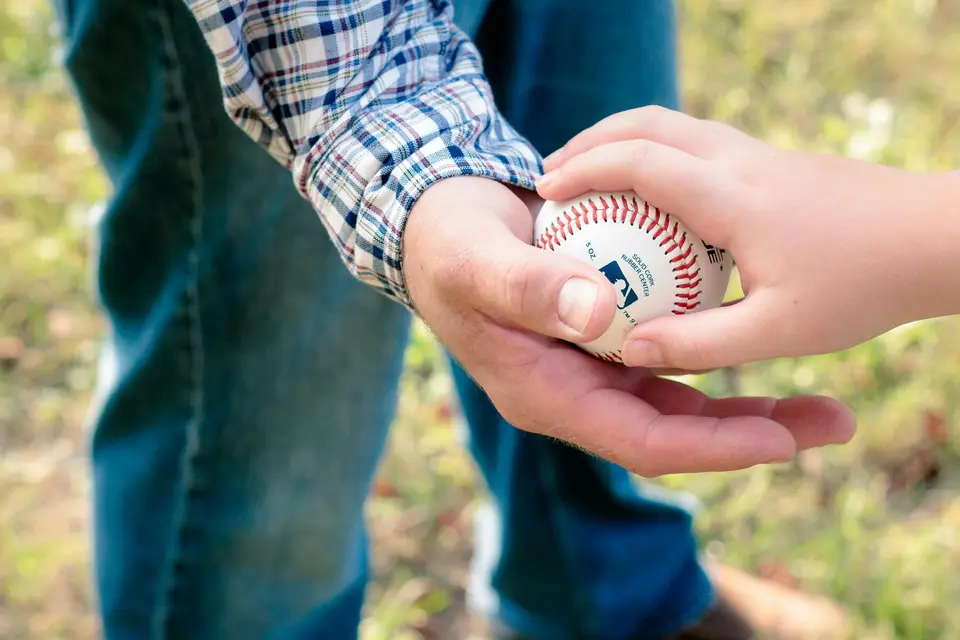 Cognitive Development: Feeding Your Child’s CuriosityCognitive development in children: how kids learn to think, remember, talk and solve problems, plus everyday ways dads can feed curiosity. See ideas by age.
 Home Science Experiments for KidsEasy science experiments for kids at home with kitchen supplies: fizzing reactions, ice melts, paper rockets and plant growing. Safety tips for dads included.
 Fun Learning Through Play: Games That Build SkillsLearning through play, explained for dads: simple games by age that build language, math, motor and social skills without flashcards. Try one idea tonight.
Ask a question, meet other dads in the 24/7 room, or join the community for resources and support at every stage.
Join our 24/7 Room to meet and talk with other dads
Join Today