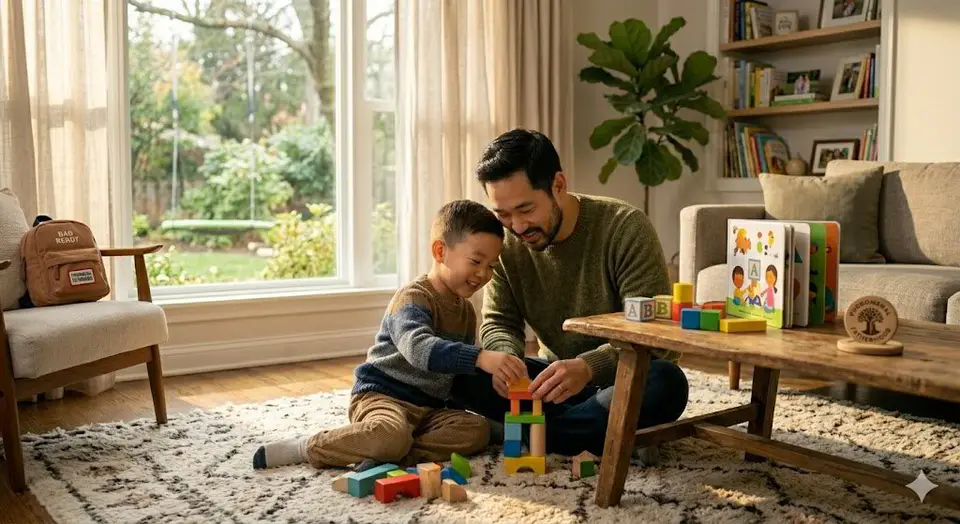
The four parts of school readiness
Teachers often say they can teach a child letters in a few weeks, but a child who can’t wait their turn, follow a two-step direction or recover from a disappointment will struggle all year. That’s why readiness is broader than academics.
Social
Taking turns, sharing materials, joining a game, asking an adult for help, and handling being told no by another child.
Emotional
Naming feelings, calming down with some help, saying goodbye to a parent without a long meltdown, and trying again after a mistake.
Cognitive
Listening to a story, recognizing some letters and their sounds, counting objects, sorting by color or size, and following simple directions.
Physical
Holding a crayon, using scissors, opening a lunch container, using the bathroom independently, running, climbing and sitting for short stretches.
Free school readiness resources worth knowing
You don’t need to buy a curriculum. Some of the strongest resources are free and already in your community.
- Your public library: story times, early-literacy kits, and librarians who can recommend books at your child’s level. Many libraries also run kindergarten-prep sessions in the spring and summer.
- CDC “Learn the Signs. Act Early.” milestone checklists and the free CDC Milestone Tracker app, which show what most children do by age 4 and 5.
- HealthyChildren.org from the American Academy of Pediatrics, with plain-language articles on preschool, sleep and behavior.
- Your school district’s kindergarten registration page, which often lists expected skills, open-house dates and screenings.
- Local early-education programs such as Head Start or state pre-K, which you can explore through our page on childcare assistance and early education programs.
Books and early literacy: where dads make a big difference
Reading aloud is the single habit most worth protecting. It builds vocabulary, attention span and the idea that books are enjoyable. Dads often read differently than moms, with more questions, sound effects and silly voices, and kids benefit from both styles.
Make it interactive. Pause before the last word of a rhyming line and let your child fill it in. Ask “What do you think happens next?” Point to the words as you read a title. Let your child “read” a familiar book to you from memory; that is real pre-reading practice.
Choose a mix: picture books about starting school, books with rhyme and repetition, simple nonfiction about trucks or animals, and wordless picture books where your child tells the story. Our list of parenting books and podcasts can help you find titles for yourself, too.
Everyday activities that build readiness
Much of school readiness happens during ordinary chores. Sorting socks is a math lesson. Following a recipe practices sequencing and fine motor skills, which is why cooking with kids is such a good fit. A trip to the grocery store can include finding the letter M on signs and counting apples into a bag.
Board games teach turn-taking and losing gracefully. Playdough, tongs, stickers and child-safe scissors build hand strength for writing. Playground time builds the balance and core strength that let kids sit at a table. For more structured ideas, see fun learning through play.
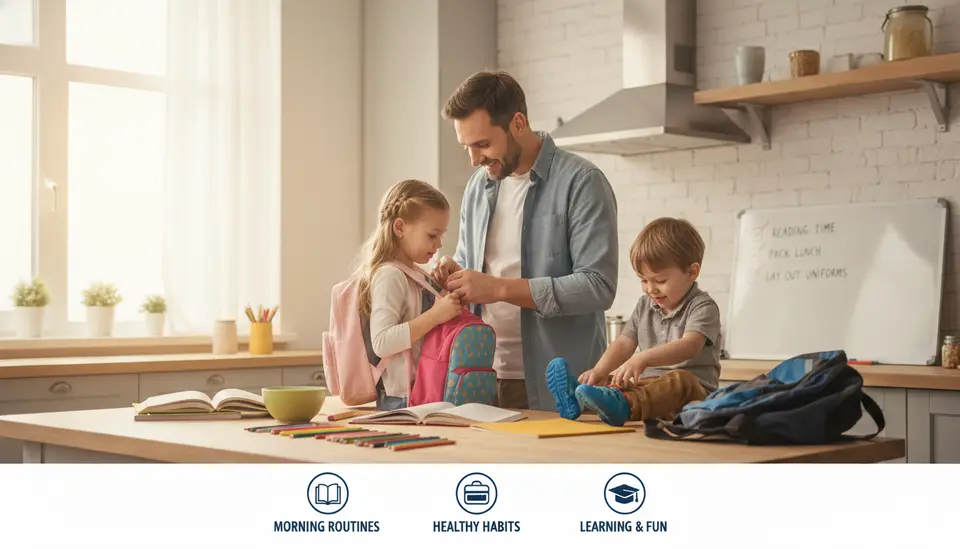
- Practice a pretend school morning: backpack on, lunchbox opened alone, goodbye hug at the door.
- Play “Simon Says” to practice listening and following multi-step directions.
- Name feelings during stories: “How do you think the bear feels right now?”
- Let your child zip their coat and put on shoes, even when it’s slower.
Building a weekly school readiness routine at home
Resources only help if they show up in your week. A simple rhythm works better than an ambitious plan you abandon by Wednesday. Think of it as a steady, low-pressure routine rather than homework for a four-year-old.
Here is one way a working dad might spread it out: bedtime stories every night, a library trip every other Saturday, a board game after Sunday dinner, and one weekday breakfast where your child helps measure and pour. Add a regular bedtime and wake time in the last month before school, since tired kids find every new skill harder.
Keep the tone light. If your child resists letter practice, switch to a scavenger hunt for letters on cereal boxes or street signs. The goal is a child who walks into the classroom curious and willing to try, not one who has been drilled into dreading it.
Checklists and when to ask for help
A checklist is useful for spotting gaps, not for grading your child. Kids develop unevenly, and plenty of confident readers can’t yet use scissors well. Our kindergarten preparation essentials and preschool readiness checklist break the skills into age-appropriate steps.
If you notice your child is well behind in several areas, such as speech that strangers can’t understand by age 4, or trouble playing with other children at all, talk with your pediatrician. Early evaluations are free through your school district in most areas, and getting support before school starts is far easier than catching up later.
FAQ
Questions dads ask
What skills does a child need to be ready for kindergarten?
Most teachers value self-care (bathroom, coat, lunch), following simple directions, getting along with other kids, managing big feelings with some help, and early literacy and number sense such as recognizing some letters and counting small groups of objects.
Where can I find free school readiness resources?
Start with your public library, your school district’s kindergarten page, the CDC milestone checklists and Milestone Tracker app, and HealthyChildren.org. Local pre-K and Head Start programs are also worth exploring.
How can a dad help with early literacy?
Read aloud daily, ask questions while you read, play rhyming and letter-sound games, point out print in everyday places, and let your child retell favorite stories. Consistency matters more than session length.
Should my child know how to read before kindergarten?
No. Most children learn to read in kindergarten and first grade. Being familiar with books, knowing some letters and enjoying stories is a strong starting point.