Why Dads Make a Difference Here
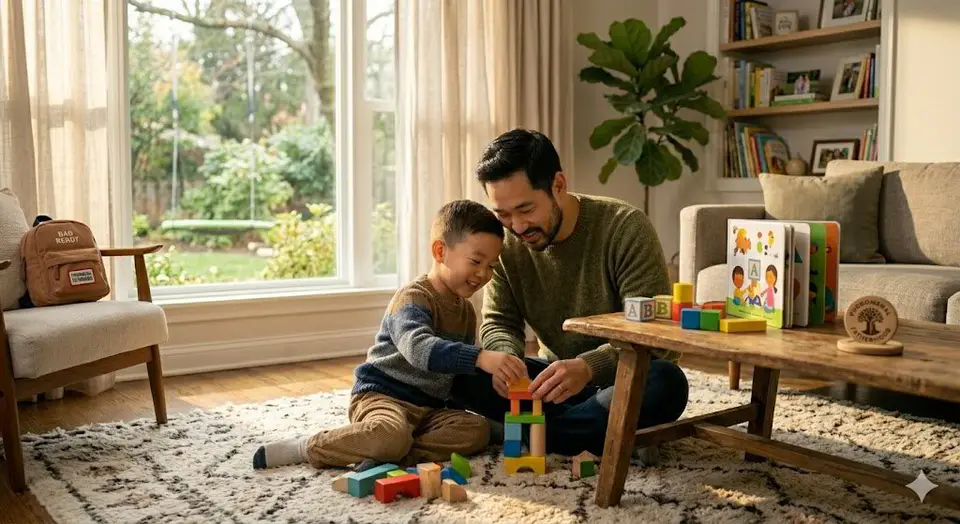
Children notice who shows up for learning. When a father reads at bedtime, asks about the school day and goes to the open house, kids get the message that school matters. Dads also tend to encourage independence and risk-taking in play, which builds the confidence children need in a new environment.
You do not need to be a teacher. You need to be curious, patient and consistent.
Independence: Self-Care Skills
Teachers in early grades manage many children at once, so kids who can handle basics on their own have an easier time. Practice these at home in the months before school, and resist the urge to do it for them when you are in a hurry.
- Using the bathroom and washing hands without help
- Putting on a jacket and shoes (Velcro counts)
- Opening lunch containers and snack packages
- Recognizing and keeping track of their own belongings
- Asking an adult for help when needed
Social, Emotional and Early Learning Skills
Getting along with others is one of the most important parts of readiness. Arrange play dates, visit parks and practice sharing, taking turns and waiting. Board games are great for this, especially games where your child sometimes loses.
Help your child name feelings and calm down. When frustration hits, coach them: “You’re mad. Let’s take three deep breaths.” Our pages on social-emotional school readiness and promoting social skills and friendships offer more activities.
You do not need flashcards. Read together every day and ask questions about the story: “What do you think happens next?” Count stairs, sort laundry by color and point out letters on signs. Let your child help measure ingredients when you cook.
Fine motor skills matter too. Drawing, cutting with child-safe scissors, playing with clay and building with blocks strengthen the hand muscles kids use for writing. Our kindergarten preparation checklist lists more ideas.
School Readiness Tips for Dads on Routines and Sleep
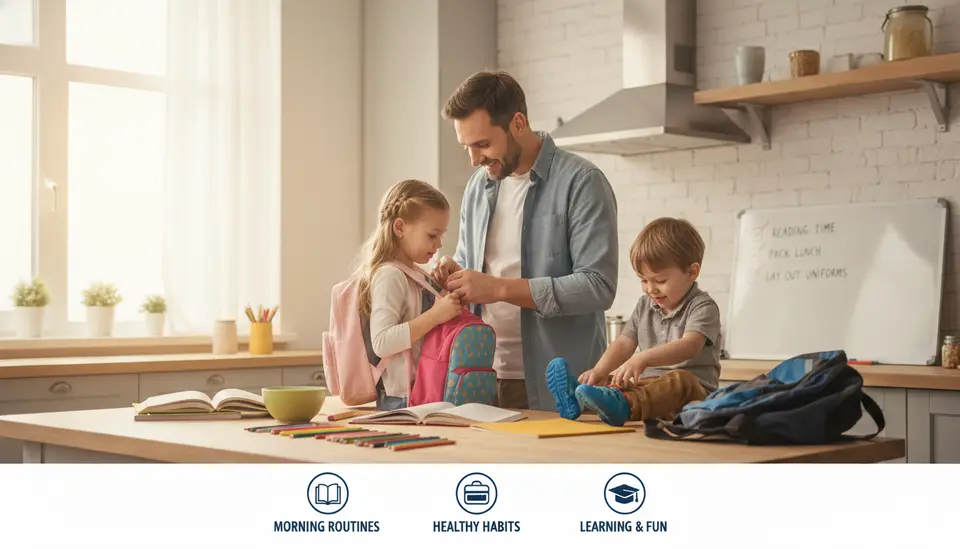
School runs on routines, so start practicing a few weeks ahead. Shift bedtime and wake-up time gradually toward the school schedule. Build a morning routine with a simple picture chart: get dressed, eat breakfast, brush teeth, grab backpack.
Well-rested kids handle new situations better. Keep bedtime consistent, limit screens before bed and protect a calm wind-down. For more structure, see establishing routines and homework help.
Your First-Week Game Plan
Visit the school beforehand if you can, and walk or drive the route. Read books about starting school. Talk about what will happen in simple, positive terms. On the first day, keep goodbyes short and warm, and tell your child exactly when you will see them again.
Afterward, ask specific questions: “Who did you sit with at lunch?” instead of “How was school?” Expect some tiredness and big feelings in the first weeks. Your calm presence at pickup matters more than any perfect answer. Our first day of school readiness tips cover more.
Partnering With Teachers and Professionals
Introduce yourself early, by email or at drop-off, and make sure the school has your contact information, not just your partner’s. Teachers appreciate knowing that both parents are involved. Ask how they prefer to communicate and what you can practice at home.
If you co-parent across two homes, share school information with your co-parent and keep routines as similar as possible. Kids adjust more easily when both homes treat school the same way.
Every child develops at their own pace, but if you are concerned about speech, motor skills, attention or social development, talk to your pediatrician. The CDC’s “Learn the Signs. Act Early.” program and free Milestone Tracker app can help you follow development. Early support can make a real difference.
Phenomenal Fatherhood offers school readiness checklists and a community of dads going through the same transition. Ask questions in our online community or the 24/7 Phenomenal Fatherhood Room, and members can use Ask a Dad for peer insight from an experienced father.
FAQ
Questions dads ask
What skills does my child need before kindergarten?
Helpful skills include using the bathroom and dressing independently, sharing and taking turns, naming feelings, following simple routines, and an interest in books and learning. Each child develops differently, so ask your pediatrician if you have concerns.
How can dads help kids get ready for school?
Read together daily, practice self-care skills, arrange play dates, build consistent sleep and morning routines, and talk positively about school. Showing up for school events also signals that learning matters.
How do I ease first-day-of-school nerves?
Visit the school ahead of time, read books about starting school, keep goodbyes short and warm, and tell your child exactly when you will pick them up. Expect some big feelings in the first weeks.
When should I start preparing my child for school?
Everyday learning can start years ahead through reading and play. Specific routine practice, like adjusting bedtime and morning schedules, works well starting a few weeks before school begins.
What if my child cries at drop-off?
It is common, especially in the first weeks. Keep the goodbye short, confident and consistent, and trust the teacher to help with the transition. Many children calm down soon after the parent leaves. If tears continue for weeks or your child seems very distressed, talk with the teacher about strategies.
Should my child know how to read before kindergarten?
Not necessarily. Many children start kindergarten still learning letters and sounds. An interest in books, being read to daily and recognizing some letters are a strong foundation; teachers take it from there. If you have concerns, ask the school what they expect. Reading together every night matters more than drilling. Point out letters on cereal boxes and street signs too.