
Why parenting checklists for dads work
Checklists don’t make you a robot parent. They free up your attention for the parts that can’t be listed, like noticing your daughter is unusually quiet after school. Pilots and surgeons use checklists for the same reason: under stress and fatigue, even skilled people forget steps.
They also make the invisible mental load visible. When the list lives in a shared app or on the fridge, it’s obvious who is carrying what, and it becomes easier to split tasks fairly instead of one parent quietly tracking everything.
Most importantly, checklists turn good intentions into actions. Saying “we should childproof before she crawls” is easy. A list with eight specific items and a target weekend actually gets done. The lists below are starting points; adapt them to your home, your child and your family’s routines.
Newborn stage checklist
In the first months, the goal is safety and survival with some sleep. Follow the Safe to Sleep guidance from the NIH, and check that gear hasn’t been recalled at cpsc.gov. Our newborn care toolkit goes deeper.
- Baby sleeps alone, on their back, on a firm flat surface with no pillows, bumpers or loose blankets.
- Car seat installed correctly; find an inspection station at nhtsa.gov/carseat.
- Feeding and diaper log kept for the first pediatric visits.
- Pediatrician appointments and vaccine dates in a shared calendar.
- Night shifts agreed in advance so both parents get a protected stretch of sleep.
- Poison Help number (1-800-222-1222) saved in both phones.
Toddler stage checklist
Once your child is mobile, the house needs a second look from knee height. Get down on the floor and crawl around; you’ll spot hazards you never noticed. Also keep an eye on development using the free CDC Milestone Tracker app, and bring questions to well-child visits.
- Furniture and TVs anchored to the wall.
- Cabinet locks on cleaning supplies, medications and laundry pods.
- Outlet covers, stair gates, and window cords out of reach.
- Small objects, button batteries and magnets kept away from little hands.
- Water safety: toilet locks, never leaving a child alone in the bath, and fences around pools.
- Milestones checked at each age range, with notes to share with your pediatrician.
School-age and teen checklists
School years bring paperwork and scheduling. A Sunday evening review of the week ahead, done together with your partner or co-parent, prevents most Monday surprises. Our school-age toolkit has more templates.
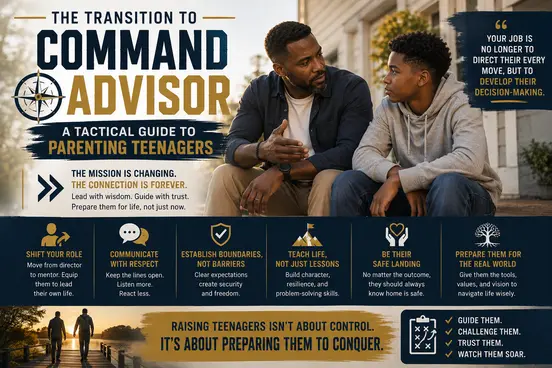
With teens, the biggest new category is digital life. Rules work best when they are discussed, written down and revisited as your teen shows responsibility. The teen parenting toolkit and internet safety guide cover this in detail.
School logistics
Forms and permission slips, lunch accounts, pickup plans, after-school activities, homework space, and teacher conference dates.
Teen digital safety
Privacy settings reviewed together, location sharing agreed, phones charged outside bedrooms overnight, and a clear plan for what to do if someone online makes them uncomfortable. Serious exploitation can be reported to the NCMEC CyberTipline.
Teen independence
Driving practice hours, a part-time job or chores with real responsibility, basic cooking, and managing their own appointments.
A wellness checklist for you
The person most often left off the family checklist is the dad running it. Fatigue and stress make every other list harder to follow. Keep a short weekly check on yourself, and treat a miss as information rather than failure.
- Did I sleep at least six to seven hours most nights?
- Did I move my body three or more times this week?
- Did I talk honestly with at least one adult about how I’m doing?
- Have I had a physical in the last year?
- Is my temper shorter than usual? If yes, what needs to change?
Making checklists stick
Start with one list at a time. If you try to build every checklist on the same night, you’ll end up with a beautiful system you never open again. Pick the stage your family is in right now, set it up this week, and add the next one when the first has become a habit.
Pick one place for lists and use it consistently, whether that’s a shared phone app or a whiteboard by the door. Review weekly. Delete what doesn’t help. And remember that a checklist is a tool, not a judgment: some weeks the only box you tick is “everyone fed.” That counts. Browse more in our guides and checklists hub.
If you’d like structure handed to you, Phenomenal Fatherhood’s free short book, “Positive Discipline Methods,” covers establishing healthy routines, and members get access to premium resources. Many dads also trade templates and tips with each other in the community forums, which is a quick way to see how other families keep things running.
FAQ
Questions dads ask
Why use checklists for parenting?
They reduce forgetting under stress and fatigue, make shared responsibilities visible between parents, and free your attention for connection with your kids instead of mental bookkeeping.
What should be on a toddler childproofing checklist?
Anchor furniture and TVs, lock up chemicals and medications, cover outlets, install stair gates, secure window cords, remove small objects and button batteries from reach, and supervise around any water.
How do parents share the family mental load?
Write tasks down in a shared list, hold a short weekly planning conversation, and assign ownership of whole areas (like school forms or doctor visits) rather than single tasks, so one parent isn’t always the manager.
What digital safety rules should I set for my teen?
Agree on privacy settings, device-free sleep, what personal information never gets shared, location sharing, and a no-punishment rule for telling you when something online goes wrong.