
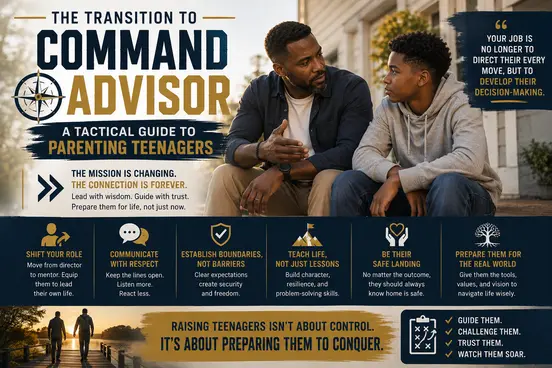
Why your role changes
Adolescence is a time of huge brain development. Teens are wired to seek independence, take some risks and care deeply about peers. That’s not rebellion for its own sake; it’s preparation for adulthood. Their ability to plan ahead and control impulses is still developing well into their twenties, which is why they still need you.
The goal is not to control every choice but to coach your teen toward making good choices on their own. In a few years, they’ll be making decisions without asking you. The practice they get now, with you nearby, is what prepares them.
This shift can feel like a loss. The kid who used to run to the door when you got home may now barely look up from the phone. Try not to take it personally. Teens still want their fathers in their corner; they just want a different kind of relationship, one with more respect for their growing judgment.
Parenting teenagers as a dad starts with listening
Many teens stop telling their parents things because every story turns into a lecture. Try a simple rule: when your teen tells you something, especially about a mistake, keep your mouth shut for the first few minutes. Listen, nod, ask a question or two. Thank them for telling you.
Then ask, “What do you think you should do?” before giving your view. You’ll often find they’ve already got a reasonable plan. If they don’t, you can offer ideas as an advisor rather than a judge. Teens who feel safe reporting problems without an immediate explosion will keep coming to you, which is exactly what you want when something serious happens. Our page on building trust and communication with teens has more ideas.
- Use side-by-side time like car rides and cooking for conversation.
- Be available late at night; teens often open up then.
- Ask specific questions instead of “How was school?”
- Share your own teen mistakes and what you learned.
Let natural consequences do some teaching
If you always rescue your teen, they never learn how actions lead to results. When your daughter forgets her gym clothes, resist driving them to school. When your son spends all his money in the first week, don’t bail him out. These uncomfortable but safe consequences teach lessons that lectures can’t.
Afterward, help them reflect without saying “I told you so.” Ask, “What would you do differently next time?” This builds problem-solving skills and confidence. Save rescues for situations involving real danger or long-term harm.
Firm on safety, flexible on style
Pick your battles. Hair, clothing, music and room cleanliness are often areas where giving more freedom costs little and builds trust. Safety, honesty and respect are where you hold firm.
Be clear about your non-negotiables and the consequences ahead of time. Examples: never getting in a car with someone who has been drinking, always letting you know where they are, no unsupervised parties, and respectful treatment of family members. Agree on a “no-questions-asked” pickup: if they’re ever in an unsafe situation, they call and you come get them, with the conversation saved for later.
Hold firm
Driving safety, substance use, online safety, curfew, honesty about whereabouts, respect at home.
Give room
Clothing, hairstyle, music, how they decorate their room, which activities they pursue.
Hand over responsibility in stages
Independence works best when it’s handed over gradually, with clear expectations. As your teen shows they can handle one level of responsibility, add the next. If they struggle, step back a bit, then try again.
Here’s a rough progression many families use, adjusted to your teen’s maturity.
When you hand over a new responsibility, explain the expectation clearly, agree how you’ll know it’s going well, and plan a check-in date. That structure makes it feel like a promotion your teen earned rather than a test they’re set up to fail.
- Early teens: managing their own homework schedule, doing their laundry, packing for trips, small budgets.
- Mid teens: part-time work or regular paid chores, making their own appointments, cooking simple meals, learning to drive.
- Older teens: managing a bank account, handling a later curfew responsibly, planning college or work steps, managing their own medications.
Know when to worry
Moodiness and pulling away are normal. Big changes that last more than a couple of weeks are worth a closer look: withdrawing from friends, dropping grades, changes in sleep or eating, talk of hopelessness, self-harm or substance use. Talk with your teen calmly, and contact their doctor or a counselor. If your teen talks about suicide, call or text 988 immediately.
Fathers of teens benefit from support too. Phenomenal Fatherhood’s teen parenting toolkit and community spaces offer resources and connection with dads in the same stage. Our page on navigating teenage emotions and behavior goes deeper on the emotional side.
FAQ
Questions dads ask
How should a dad’s role change when kids become teenagers?
Shift gradually from making decisions for them to coaching them as they make their own. Listen more, give room on low-stakes choices, hold firm on safety and hand over responsibility step by step.
How do I get my teenager to talk to me?
Listen without lecturing, use relaxed side-by-side time like car rides, be available when they’re ready to talk, ask specific questions and thank them for sharing, even when the news is bad.
Should I let my teen experience consequences?
Yes, when the consequences are safe and manageable, such as a lower grade for missed homework. Help them reflect afterward, and step in only when there’s real danger or long-term harm.
What rules should stay firm for teenagers?
Rules about safety (driving, substances, online contacts), honesty about where they are, and respectful behavior at home. Discuss these clearly in advance, along with the consequences.