
Toddler Activity Toolkit
If you've ever handed a toddler a crayon and watched them try to eat it, you know art at this age looks different. Art and crafts for toddlers isn't about producing something for the fridge. It's about squishing, smearing, tearing and discovering what happens. This guide gives dads simple setups, age-appropriate materials and a cleanup plan that won't wreck your afternoon.

Toddlers care about the doing, not the result. That's called process art: there's no right way to do it and no finished example to copy. When your 2-year-old covers a page in brown paint, they've practiced grip, color mixing and cause and effect.
Describe what they're doing instead of praising the result. Say “You made big round circles!” instead of “That's beautiful.” It keeps them focused on the experience and builds vocabulary at the same time.
Taste-safe finger paint from yogurt and food coloring, chunky crayons taped to the table, sticky contact paper with tissue squares to press on.
Painting with large brushes or sponges, tearing paper strips for a collage, big stickers on paper, playdough with rolling pins.
Gluing with glue sticks, stamping with potato halves or corks, chalk on the sidewalk, cutting playdough with plastic knives.
You don't need a craft store run. Most of these use things you already have.
Mess is part of it, but you can contain it. Strip your toddler down to a diaper or put an old T-shirt on them. Lay a shower curtain or old sheet under the work area, or take it outside. Set up everything before you invite your toddler over, because the second they arrive, they'll start.
Give a five-minute warning before cleanup and let them help: wiping the table with a sponge is an activity in itself.
Choose non-toxic, washable supplies labeled for young children, and supervise closely since everything goes in the mouth. Skip glitter, beads, googly eyes, pompoms and anything small enough to choke on until your child is older. If something is swallowed, call Poison Help at 1-800-222-1222.
For more creative ideas as your child grows, see creative play guides and the DIY learning activities for toddlers. The toddler activity toolkit also covers physical play and early talking skills.
Art time is also talking time. Name colors and textures as your toddler works: “squishy,” “sticky,” “bumpy.” Ask simple questions like “What color do you want next?” and pause long enough for an answer, even if it's a point or a grunt.
Toddlers produce a lot of art. Take a photo of each piece and save only a few favorites. One idea: keep a dated folder per year and let your child pick one piece a month to keep. Years later, it's a fun way to see how they've grown. Share your best toddler craft wins in the Phenomenal Fatherhood community so other dads can try them too.
FAQ
Taste-safe finger painting, pressing tissue paper onto sticky contact paper, scribbling with chunky crayons and squishing playdough are all good fits for 1-year-olds with close supervision.
Use a drop cloth or shower curtain, dress your toddler in old clothes, do messy projects outside or in the bathtub, and set everything up before your toddler joins.
It lets toddlers explore materials freely, build hand strength and coordination, make choices and express themselves without pressure to make something look a certain way.
Keep going
Toddler Activity Toolkit for DadsToddler activities for dads, sorted by what your 1- to 3-year-old needs: movement, messy art and early talking. Easy setups for busy days. Start playing.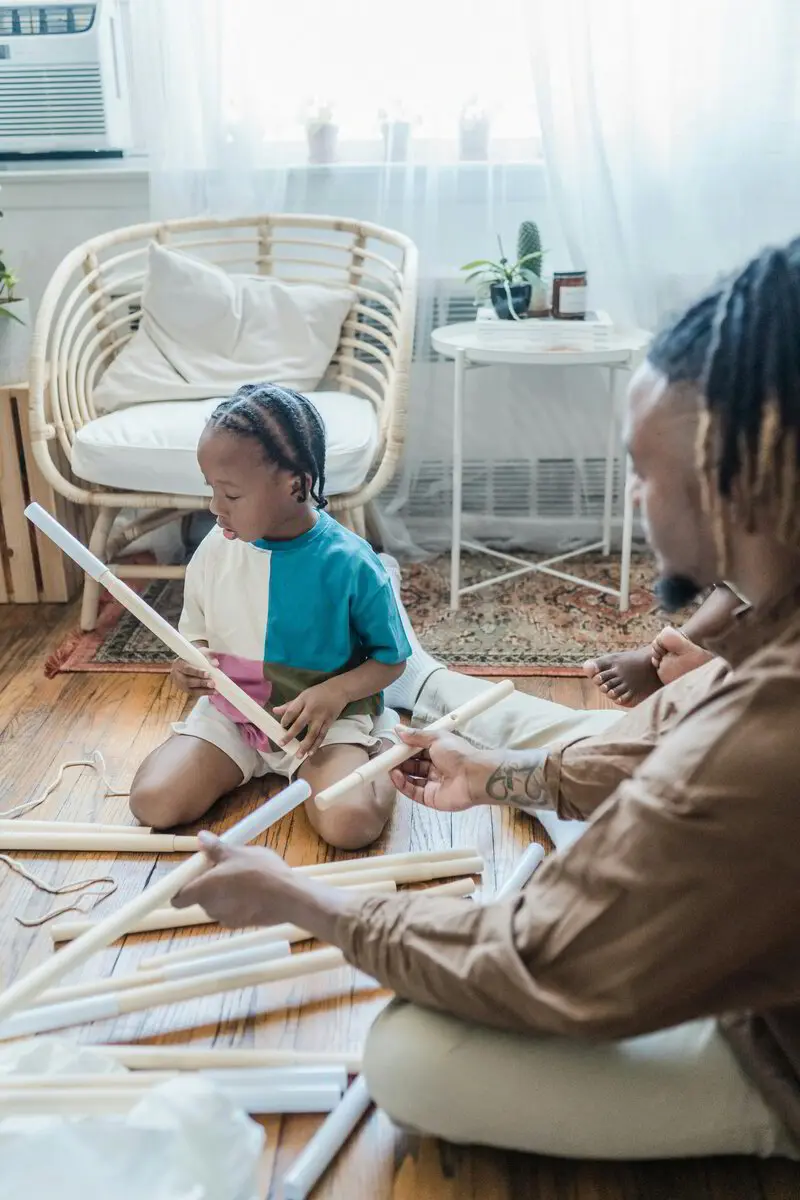 DIY Learning Activities for ToddlersDIY learning activities for toddlers made from household items: sorting games, sensory bins, matching and counting. Simple setups dads can build today.
 Indoor Activities for Rainy Days and Restless KidsRainy day indoor activities for kids that burn energy and keep the peace: obstacle courses, forts, games and kitchen projects. Pick one for the next storm.
Ask a question, meet other dads in the 24/7 room, or join the community for resources and support at every stage.
Join our 24/7 Room to meet and talk with other dads
Join Today