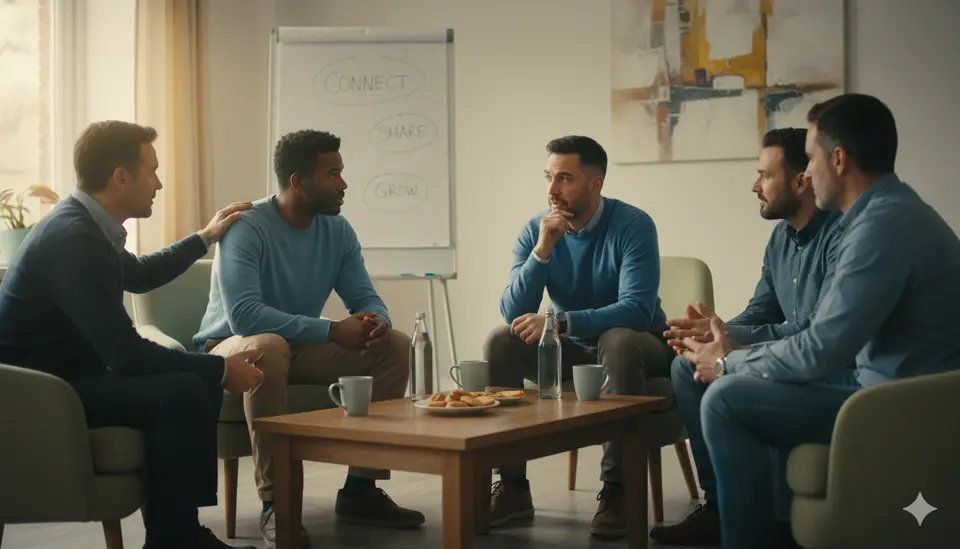

What actually happens in fatherhood support groups
Most groups follow a loose pattern. There’s a quick check-in where each dad shares how his week went. Then the group might discuss a topic, such as sleep, discipline, co-parenting or work stress, or simply follow whatever came up during check-in. A facilitator, if there is one, keeps things moving and makes sure everyone gets a chance to talk.
Some groups meet over breakfast. Others meet in a community center, a church basement or on video at 9 p.m. after the kids are down. A few are activity-based: dads and kids at a park, with the conversation happening on the sidelines.
Why dads keep coming back
The first benefit is relief. Hearing another father say “my toddler hits me and I don’t know what to do” or “I don’t feel bonded to the baby yet” makes your own struggles feel normal. That alone lowers stress.
The second is practical knowledge. Groups are full of tested ideas: the bedtime chart that finally worked, the pediatric dentist who’s great with anxious kids, the phrase that stopped sibling fights. You get real-time advice from dads in your situation rather than generic tips.
The third is accountability. When you tell the group you’re going to try putting the phone away at dinner, someone will ask how it went next week. That gentle follow-up helps you actually change.
Groups for different situations
A group works best when the dads in it share something important. Look for one that matches where you are.
First-time and expecting dads
Covers pregnancy, birth, newborn care, sleep deprivation and adjusting your relationship. See our first-time dads support group page.
Single fathers
Focused on solo parenting logistics, custody, dating and isolation. The single dads support network is built for this.
Divorced or separated dads
Co-parenting communication, custody transitions and rebuilding after a breakup.
Stepdads and blended families
Finding your role, building trust with stepkids and coordinating between households.
Dads facing hard circumstances
Groups for fathers of children with disabilities or medical needs, NICU dads, and bereaved fathers often run through hospitals and specialized organizations.
Getting past the first-meeting nerves
Many men hesitate because they worry about looking weak. Here’s the truth: the dads in that room are there because they care enough about their kids to show up. Nobody is judging you for being there; they’re there too.
You don’t have to share much at first. It’s fine to listen for a meeting or two. When you’re ready, start with something practical, like a question about sleep or a funny story from the week. Over time, as trust builds, the conversations naturally go deeper. Dropping the act and being honest is usually what makes a group valuable, but you get to set the pace.
It may help to remember what the other dads probably felt at their first meeting: the same mix of doubt and hope you’re feeling now. Most will remember that and go out of their way to make a newcomer feel welcome.
In-person vs. online groups
In-person groups build strong relationships and often lead to friendships and family meetups outside the group. They can be harder to fit around work and childcare, though.
Online groups remove the commute and let you join from a quiet room at home, which is a big deal for shift workers, rural dads and anyone without easy childcare. Phenomenal Fatherhood’s online community includes forum and discussion areas, and the 24/7 Phenomenal Fatherhood Room is always open for dads who need to talk. Our dads supporting dads group chat is another easy starting point.
Many fathers use both: a monthly in-person meetup plus ongoing online conversation in between.
Finding or starting a group near you
Ask your pediatrician’s office, local hospital, library, community center or faith community whether they host a dads’ group. Fatherhood.gov, the National Responsible Fatherhood Clearinghouse, lists resources for fathers, and 2-1-1 can point you toward local family services. Our support groups page has more search ideas.
If nothing exists nearby, start one. You need only two or three other dads, a regular time and a simple format: a check-in, one topic and a wrap-up. A park meetup on Saturday mornings with the kids is a low-pressure way to begin. Keep it consistent, keep confidentiality, and let it grow from there.
Whatever group you join, give it at least three or four meetings before deciding. The first session is often the least comfortable, and the value tends to build as you get to know the other fathers and their stories. If the group still doesn’t click after that, try another; the fit matters, and there are more options than most dads realize.
FAQ
Questions dads ask
What happens at a dads’ support group?
Usually a short check-in, followed by discussion of a topic or whatever members bring up. Dads share experiences, swap practical tips and encourage each other. A facilitator may guide the conversation.
Are there support groups for single fathers?
Yes. Many communities, hospitals and nonprofits run groups for single and divorced dads, and online options make it easier to connect with other single fathers regardless of where you live.
Do online fatherhood groups work as well as in-person ones?
They can. Online groups are easier to fit into busy schedules and feel lower pressure for some men, while in-person groups often build deeper local friendships. Many dads use both.
How do I start a dads’ group in my area?
Gather two or three interested fathers, pick a regular time and place, keep a simple format, agree on confidentiality, and invite others through schools, pediatric offices, libraries and community boards.