
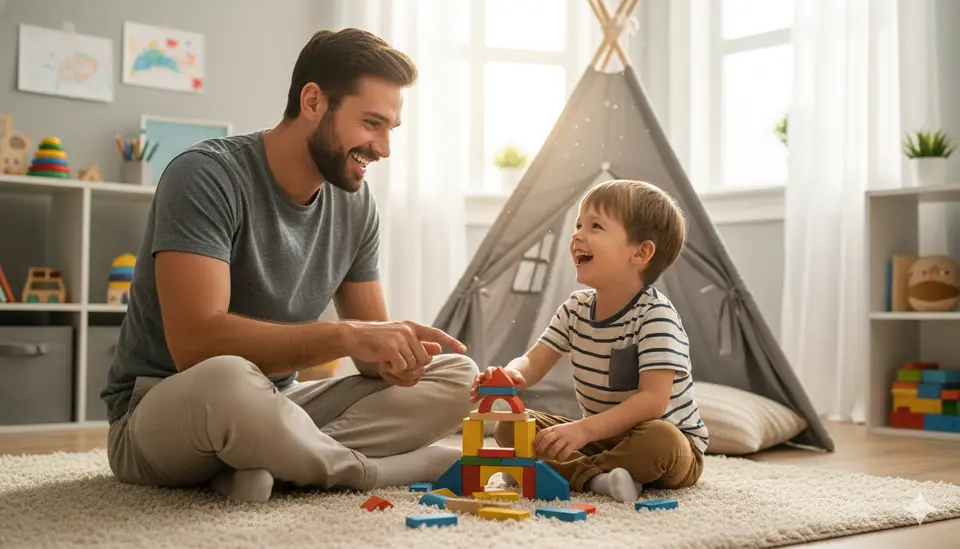
Reactive vs Proactive Fathering
Reactive parenting is responding to problems as they come: the meltdown, the bad grade, the slammed door. Proactive parenting plans for connection and growth before problems show up. Both are needed, but most dads spend nearly all their energy on the first.
Shifting even a little toward proactive pays off. Kids who get regular, predictable attention from their dads tend to seek attention in negative ways less often, and you will feel more confident when you are not always playing catch-up.
Two Myths That Stop Dads From Starting
Myth one: intentional means perfect. It does not. You will skip a week, lose your temper and forget the plan. Intentional dads simply come back to the plan.
Myth two: intentional means giving up your own goals. Also false. The habits below are small by design. Balance is the point, not sacrifice. A father who takes care of his health and interests has more to give.
The 10 Intentional Dad Habits, Side by Side
Time is per week. Effort is how hard it is to start and keep. Payoff is the kind of benefit dads most often notice.
1. One-on-one dates
Time: 30 to 60 minutes per child. Effort: medium. Payoff: each child feels individually seen; especially powerful with siblings.
2. Phone-free dinners
Time: none extra. Effort: medium (the habit is hard to break). Payoff: more conversation and fewer distractions at the table.
3. Bedtime ownership
Time: 20 minutes a night. Effort: low once started. Payoff: kids often open up when the lights are low.
4. The daily question
Time: 5 minutes. Effort: low. Payoff: better conversations. Swap “How was school?” for “What made you laugh today?”
5. A weekly family meeting
Time: 15 minutes. Effort: medium. Payoff: fewer surprises and kids who feel heard in family decisions.
6. Teach one skill a month
Time: varies. Effort: medium. Payoff: competence and confidence; think tying shoes, changing a tire or cooking eggs.
7. Show up to their world
Time: varies. Effort: low to medium. Payoff: learning their games, music or shows says “I care about what you care about.”
8. Pause before you react
Time: seconds. Effort: high. Payoff: fewer regrets and a calmer home.
9. Model the habits you want
Time: ongoing. Effort: medium. Payoff: kids copy what you do; reading, exercise and apologizing are all contagious.
10. Monthly self-check
Time: 15 minutes. Effort: low. Payoff: catches drift early. Ask: Where did my time go? What do I want to change?
Choosing Your First Two Intentional Dad Habits
Do not try all ten at once. Choose one low-effort habit and one higher-payoff habit. For example, start the daily question (low effort) and one-on-one dates (high payoff). Give them a month before adding more.
Match habits to your season. A dad with a newborn might pick bedtime ownership and pausing before reacting. A dad with teens might choose showing up to their world and phone-free dinners. A dad who travels might rely on the daily question by video call and a monthly self-check.
- Write your two habits somewhere you will see them daily.
- Tell your partner or kids what you are trying; it builds accountability.
- Track it simply: a checkmark on the calendar is enough.
What Changes When You Parent on Purpose
Dads who build these habits often notice that discipline gets easier because kids feel more connected and want to cooperate. Conversations get deeper. And fathers themselves often report feeling more confident and less guilty, because they know they are investing where it counts.
Intentional habits also teach your kids something about how to live: that the people you love deserve your planning and attention, not just your leftovers.
Your partner benefits as well. When you plan connection time instead of waiting to be asked, she is no longer the only one tracking what the kids need, and that shared load tends to ease tension at home.
Keep It Going
Habits are easier to keep with company. Share what you are trying in Phenomenal Fatherhood’s online community or the 24/7 Phenomenal Fatherhood Room, and members can use Ask a Dad to get peer insight from an experienced father on making habits stick.
For more on the thinking behind this approach, read why intentional parenting matters for fathers and our intentional parenting tips. For activity ideas, browse father-child bonding activities and time management for busy parents.
FAQ
Questions dads ask
What does it mean to be an intentional father?
An intentional father plans how he wants to connect with and guide his children instead of only reacting to problems. He builds regular habits of attention, conversation and teaching that fit his family’s life.
How can a busy dad spend quality time with his kids?
Use time you already have, such as dinner, bedtime and car rides, with phones put away. Add one short one-on-one date per child each week or two. Small, consistent moments matter more than occasional big outings.
Do I have to be perfect to be an intentional parent?
No. Intentional parenting is about direction, not perfection. You will miss days. What matters is returning to your habits and repairing when things go wrong.
Which intentional habit should I start with?
Start with one low-effort habit, like a better daily question, and one high-payoff habit, like one-on-one time. Try them for a month before adding more.
How do I keep intentional habits going when life gets chaotic?
Shrink them rather than dropping them. During a move, a new job or a family illness, a five-minute version of your one-on-one time still counts. When things settle, scale back up. The monthly self-check is your built-in reminder to notice what slipped and pick it back up without guilt.