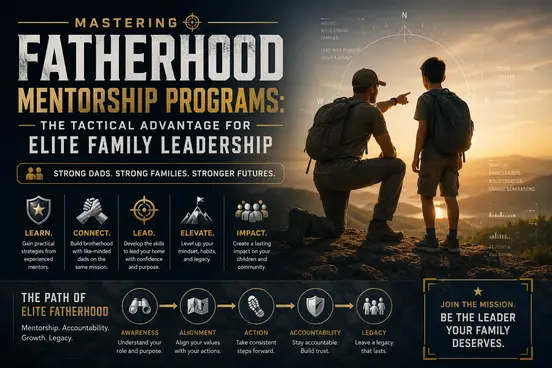

What Fatherhood Empowerment Programs Aim to Do
At their core, these programs help fathers be more involved, more skilled and more confident in their role. That goes beyond financial support to include emotional connection, communication, discipline and healthy relationships with co-parents.
Many programs also recognize that fathers face barriers that make involvement harder, such as unemployment, unstable housing, past incarceration, strained co-parenting relationships or simply never having had an involved father themselves. The best programs address the whole man, not just the parenting skills.
Common Types of Programs
Parenting skills programs
Group classes or workshops on child development, discipline, communication and routines, often over several weeks.
Responsible fatherhood programs
Often funded or supported by government agencies, these may combine parenting education with co-parenting, healthy relationship and economic stability services. Fatherhood.gov provides information on this field.
Co-parenting and relationship programs
Help separated or divorced parents communicate and cooperate for their children’s sake.
Reentry fatherhood programs
Support fathers returning home after incarceration to reconnect with their children and rebuild their lives.
Coaching and community programs
Combine coaching, education and peer connection, often online. Phenomenal Fatherhood’s community fits here.
What Participants Typically Gain
Dads in empowerment programs often report better communication with their kids and co-parents, more confidence in handling discipline, and a stronger sense of purpose as fathers. Many also value the friendships and support network they build with other men in similar situations.
Programs that address mental health and stress can help fathers recognize when they need more support. Children feel the difference too: a dad who has new tools and people in his corner tends to show up more steadily, and that steadiness is what kids notice.
- Practical parenting tools for different ages
- Communication and conflict skills
- Stress management and emotional awareness
- Connections to other services such as employment or legal resources
- A network of fathers committed to the same goals
How to Find Fatherhood Empowerment Programs Near You
Start by dialing 2-1-1 or visiting 211.org and asking about fatherhood, parenting or co-parenting programs in your area. The National Responsible Fatherhood Clearinghouse at fatherhood.gov is a federal resource for fathers and programs. If you have a child support case, your state child support agency may know of programs; you can find your agency through the federal Office of Child Support Services.
Community centers, congregations, hospitals and schools may also host or refer to programs. Our pages on fatherhood education programs, government resources for dads and local community centers list more places to look.
Questions to Ask and How to Make the Most of a Program
Programs vary widely, so ask a few questions up front: Who runs it and what is their experience? How many sessions are there and how long is each? Is there a cost, and are there eligibility requirements? Are there online or evening options? Does it connect you with other services you may need?
If you are involved in a custody or child support case, ask whether completion is recognized by the court or agency, but remember that a program cannot provide legal advice. Our legal and custody support resources can help you find qualified help.
Treat the program like a job you care about. Show up on time, do any practice between sessions and be honest in group discussions. The dads who get the most out of these programs are rarely the ones who arrive with everything figured out; they are the ones who keep coming back.
Bring what you learn home right away. If a session covers calm limit-setting, try it that evening and report back the next week on what happened. Programs work best when the lessons leave the room. Stay in touch with the dads you meet after the program ends, since that network can outlast the curriculum.
Empowerment Through Community at Phenomenal Fatherhood
Phenomenal Fatherhood is a father-centered education, support and community platform based in Houston and serving dads nationwide. Our online community, the 24/7 Phenomenal Fatherhood Room and Ask a Dad give fathers ongoing connection, and membership ($12 per month or $100 per year) includes premium resources and discounts on fatherhood programs.
For the personal side of empowerment, read our dad empowerment strategies, or explore fatherhood coaching and training.
FAQ
Questions dads ask
What is a fatherhood empowerment program?
It is a structured program that helps fathers build parenting skills, confidence and connection with their children. Many also address co-parenting, stress and practical barriers like employment.
Who can join a fatherhood program?
Eligibility varies. Some programs are open to any father, while others focus on specific groups, such as new dads, separated fathers or fathers returning from incarceration. Ask each program about requirements.
Are fatherhood programs free?
Some community and agency programs are free or low-cost, while coaching and private programs usually charge a fee. Dial 2-1-1 to ask about free options near you.
Can a fatherhood program help with custody?
Programs can build parenting and co-parenting skills, and some courts or agencies recognize completion, but they cannot give legal advice. Talk to a family law attorney about custody questions.
What if I cannot attend sessions in person?
Ask whether the program offers virtual sessions, recorded content or evening times. Many now do. If none fit, an online fatherhood community can provide ongoing peer connection while you look, and you can return to a structured program when your schedule allows.
Are fatherhood programs only for dads who are struggling?
No. Many programs welcome any father who wants to grow, including dads who are doing well and simply want new tools, connection with other men or preparation for a new stage like the teen years. Experienced dads often end up mentoring newer fathers in the group, which can be rewarding in its own right.